There are 13 common recycling symbols, and that’s without taking into account the 6 separate plastic recycling symbols. Confusion around each sign and what it means can result in people not recycling at all. To help make recycling easier, we’ve created this guide to explain each recycling symbol, what it means and the rules for recycling specific materials.
The Most Common Symbols for Recycling
Understanding symbols for recycling is essential if we want to contribute to a sustainable future. These are the recycling logos you’re most likely to see:

1. Mobius Loop
The Mobius loop is the most recognised recycling symbol. It means that the item is both recyclable and made from recycled materials.
There will usually be a percentage number in the centre of the loop. This number indicates how much of the item is made from recycled goods.
Although the Mobius loop indicates something can be recycled, it doesn’t mean it actually will be. You still need to check local authority recycling guidelines for the specific material the product is made from.
2. Tidyman
While not strictly one of the recycling logos, the tidyman is a very common symbol seen in the UK that reminds people not to litter.
3. Recycle and Rinse
This sign means that an item can be recycled but must be rinsed first to avoid contaminating any other recycling. Food residue can inhibit recycling and so must be washed away before you put food packaging in the recycling bin.
4. Flatten with Cap On
Usually found on plastic bottles and cartons, the instruction here is to squash the bottle or carton and then put the lid back on ready for recycling. This allows you to fit more in your wheeled bin or commercial container, and means small lids aren’t lost and can also be recycled.
5. Recycle with Bags at Local Stores
Many types of soft plastic packaging can now be recycled at supermarkets or local stores where you see these recycling symbols. They denote that you cannot recycle soft packaging at home but can take them to a local collection point. The BPF can help you locate your nearest store.
6. Don’t Recycle and Remove Sleeve
This sign is usually seen on plastic bottles and indicates that although the bottle itself may be recyclable, the film sleeve is not. You need to take off the sleeve and put it into general waste, and recycle the bottle separately.
7. Green Dot Recycling
The green dot recycling sign is not actually one of the recognised recycling symbols, though many think it is. It simply means that the producer of the material has made a financial contribution to the recycling of the packaging. It has no bearing on whether the item contains recyclable materials or how much of it can be recycled.
Other Material-Specific Symbols
There are several other recycling logos that are designed to identify the specific material of a product or its packaging. These exist to help domestic or commercial properties to efficiently segregate waste.
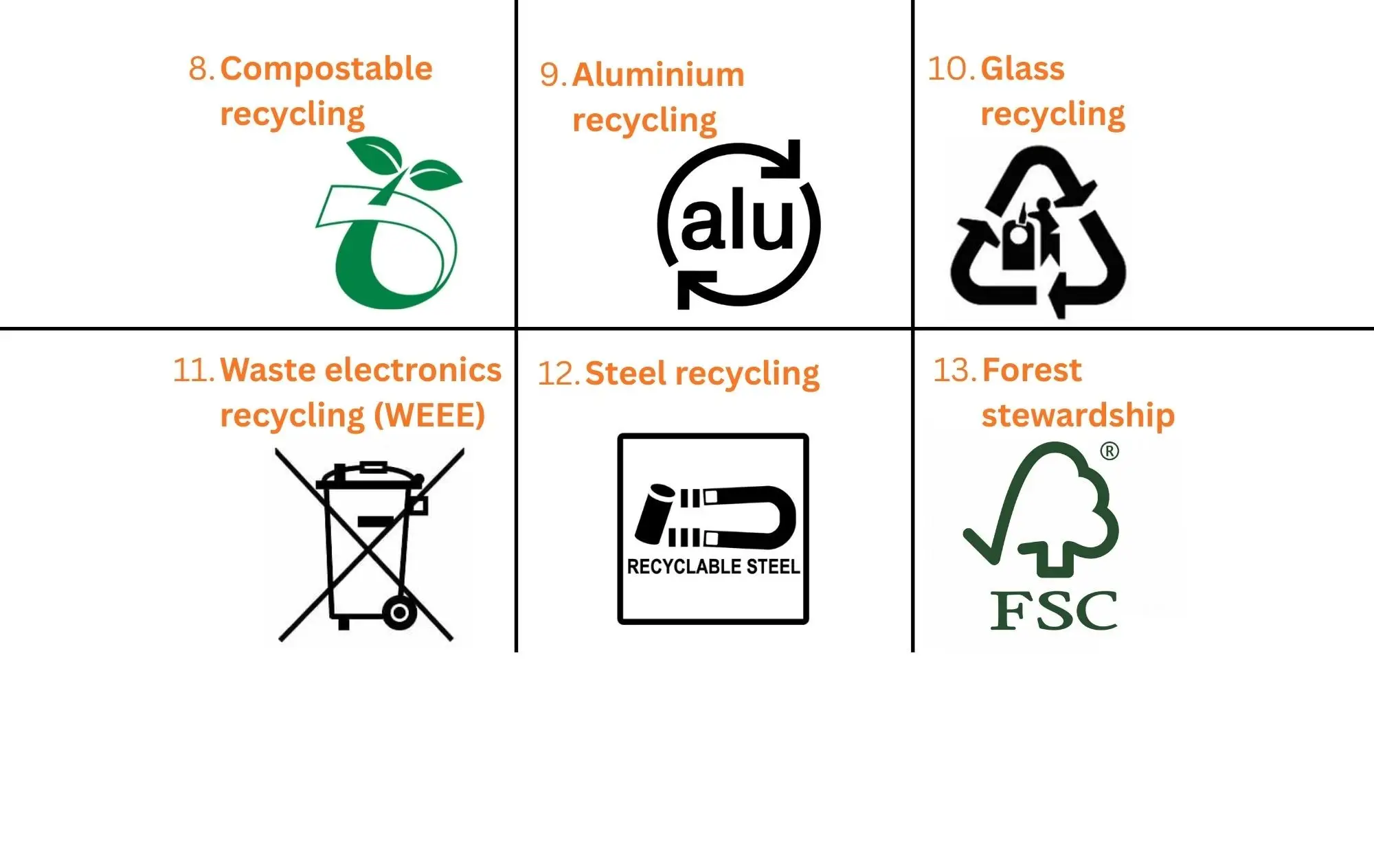
8. Compostable Recycling
The seedling symbol, to give it its official name, is a registered trademark from European Bioplastics. It denotes that the material is certified industrially compostable. This does not mean it can be recycled.
The packaging must meet certain conditions to carry this symbol, such as breaking down at high temperatures. However, it must still be put into general waste, and not in recycling bins.
9. Aluminium Recycling
Used on items including drinks cans, pie tins, aerosols cans and aluminum foil, this recycling symbol highlights that these products are made from recyclable aluminium and can be recycled continuously. Anything with this sign should be placed in mixed metal recycling bins and not general waste.
10. Glass Recycling
Another of the product-specific recycling logos, this one pertains to glass items. You will see it on glass bottles and jars and, once they have been cleaned, they can go in a glass recycling bin.
11. Waste Electronics Recycling (WEEE)
The WEEE sign shows that an item must not be put into general waste. Electronic items, such as batteries, cables and plugs need to be disposed of separately. Businesses with large volumes of WEEE waste can use a licensed waste carrier, while domestic properties should take electrical goods to their local recycling centre.
12. Steel Recycling
Steel can be recycled countless times without ever losing its quality. Its magnetism also makes it easy to separate during the sorting process.
13. Forest Stewardship
The Forest Stewardship Council (FSC) symbol indicates that a wood or paper product comes from responsibly managed forests. It’s not directly a recycling symbol but does support sustainable sourcing and can be found on recycled paper and cardboard products.
Plastic Recycling Symbols
Plastic can often be the most confusing, with there being different rules for different types of plastic. Recycling symbols for plastics follow a number system, with each number referring to a different type of plastic. Plastic recycling symbols look like the Mobius loop with the number inside. The numbers do not relate to recycling, but they do help to point you in the right direction when recycling plastics.
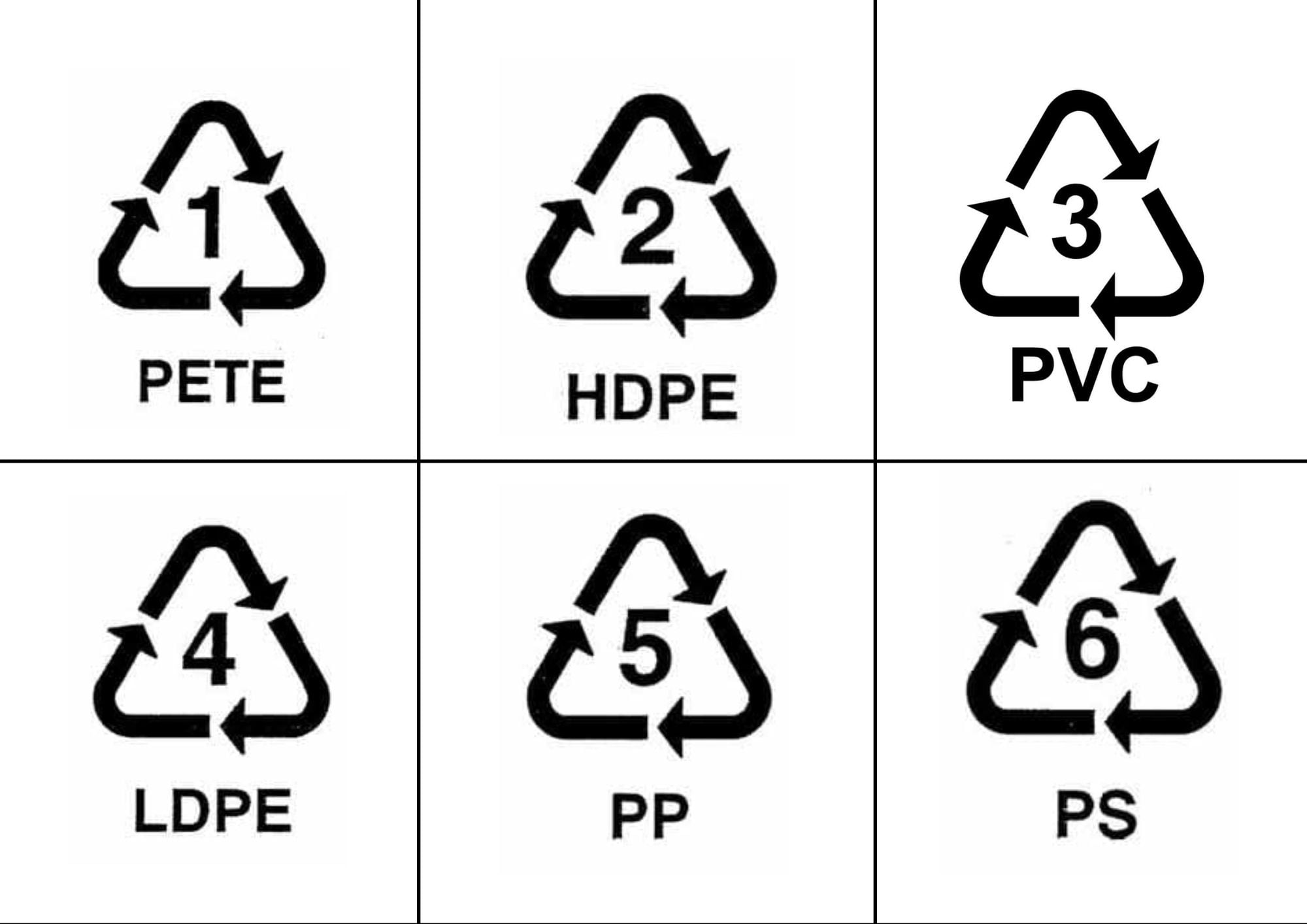
- PETE (Polyethylene Terephthalate) – Common in plastic food and drinks bottles, and widely recycled in the UK.
- HDPE (High-Density Polyethylene) – Usually found on milk cartons, detergent bottles, and toys. Recycling rules vary by item.
- PVC (Polyvinyl Chloride) – PVC is used for pipes, window frames, and some packaging. You need to check local rules for recycling
- LDPE (Low-Density Polyethylene) –Needs to be separated and taken to a recycling collection point. Common items include squeeze bottles and bags.
- PP (Polypropylene) – Used in food containers, car parts and textiles, PP recycling is getting better but collection can be inconsistent.
- PS (Polystyrene) –Found in disposable cups, cutlery and some packaging. Polystyrene items should go in the general waste bin, unless otherwise clearly stated.
Why Do We Have Different Recycling Symbols?
According to a WRAP survey, 82% of UK residents say they place non-recyclable items in their recycling bins. Even one item that can’t be recycled being placed in a recycling bin can contaminate the entire load, causing valuable resources to be rejected, increasing processing costs and creating additional environmental harm.
When we take the time to understand recycling labels, we reduce contamination, improve waste collection and disposal processes and increase recycling rates. It’s also important to check local authority guidance on what can and can’t be recycled. Making informed choices ensures that recyclable materials are successfully processed and turned into new products, rather than being diverted to landfill or incineration.
Guaranteed Recycling from Fresh Start
At Fresh Start, we’re committed to transparent, responsible, and guaranteed recycling services you can trust. We aim to send zero waste to landfill, prioritising reduction, reuse and recycling for every material. We support businesses with waste management solutions that ensure compliance and improve sustainability.
If you want the confidence that your waste is handled correctly, our expert team is here to ensure your recycling is managed efficiently, compliantly and with the environment in mind.