Key Takeaways:
- Recyclable waste is materials that can be cleaned, processed and remade into new products, reducing reliance on raw materials
- Biodegradable waste is organic materials that naturally break down over time, such as food scraps, paper, and garden waste
- Biodegradable items vary in how quickly and under what conditions they can be broken down, ranging from weeks to years
- Compostable waste is an offshoot of biodegradable waste that decomposes fully into nutrient-rich compost under specific conditions
- All waste should be cleaned and sorted into the correct waste container for proper recycling
- Biodegradable and compostable waste cannot go into recycling bins and must go into the general waste bin
Why We Need Recycling Guidelines
With DEFRA (Department for Environment, Food & Rural Affairs) setting targets for the UK to reduce non recyclable waste by at least 50% by 2042, understanding the different types of recycling is crucial if this is to be achieved.
With more recycling options than ever before, the terms, ‘recyclable’, ‘compostable’, and ‘biodegradable’ are often used to mean the same thing, with confusion surrounding their exact meanings. Understanding these distinctions is essential for consumers and businesses to make informed choices that genuinely contribute to environmental goals.
This guide explains what recyclable, compostable and biodegradable waste are, and the part each one plays in reducing waste and creating a healthier planet.
Contents:
- What Is Recyclable Waste?
- What Is Biodegradable Waste?
- What Is Compostable Waste?
- Recycling Guidelines: What To Do With Your Waste
- Household and Business Waste
What Is Recyclable Waste?
Recyclable waste refers to materials that can be collected, processed, and remanufactured into new products. With recyclable waste, goods are diverted away from landfill and can be turned into something new, reducing the need for raw materials. Recycling therefore saves energy, and lowers greenhouse gas emissions. However, not all items that look recyclable actually are, which is why proper sorting is essential.
Examples of Recyclable Waste
The most common recyclable waste includes:
- Paper and cardboard – Newspapers, magazines, office paper, cereal boxes and corrugated cardboard
- Glass – Bottles and jars in any colour
- Metals – Aluminum cans, steel food tins and clean foil
- Plastics – Plastic bottles and containers labeled with recycling symbols, such as PET and HDPE
For proper recycling, these items should be clean and dry before going into wheeled recycling bins, as contamination can cause entire loads to be rejected.
Non Recyclable Waste
There are a number of items that might look like they can be recycled but are actually non-recyclable waste. These include:
- Food-contaminated packaging, for example greasy pizza boxes or used paper plates
- Polystyrene
- Ceramics, mirrors and window glass
- Disposable coffee cups with plastic linings
RECYCLE WITH FRESH START

What Is Biodegradable Waste?
Biodegradable waste is material that naturally breaks down over time by microorganisms in the environment like bacteria and fungi. Eventually these materials return to organic matter in the environment. Biodegradable waste comes in many different forms with huge variations in the length of time it takes to actually be broken down and the conditions required to make this happen. For example, food waste might take a few weeks, while a plastic toothbrush could take up to 500 years.
Examples of Biodegradable Waste
Typical biodegradable items include:
- Food scraps such as fruit and vegetable peels
- Paper products like napkins and writing paper
- 100% natural fabrics such as cotton, wool and silk
- Untreated wood
- Garden waste including leaves, grass and small branches
These materials will eventually decompose, but should ideally be sent for recycling where possible.
What Is Compostable Waste?
Compostable waste is a sub-category of biodegradable waste. It is able to break down naturally into non-toxic, nutrient-rich compost under specific composting conditions, and usually within a defined time frame. This compost can then be used to improve soil health, and support plant growth, reducing the need for chemical fertilisers. Compostable waste significantly contributes to a circular economy.
Wasted food and drink products in the UK produce the equivalent of 16 million tonnes of carbon dioxide in a year. When compostable waste is correctly disposed of, this figure is greatly reduced, demonstrating the need to better manage compostable waste and dispose of it responsibly.
Examples of Compostable Waste
Compostable materials include:
- Fruit and vegetable scraps
- Coffee grounds and tea leaves (including paper tea bags without plastic)
- Eggshells
- Garden waste including leaves and grass
- Compostable packaging certified by EN 13432 standards
Food items can generally be composted at home. However, packaging may require industrial composting facilities and should be taken to local recycling centres. It should not be put in household recycling bins.
Biodegradable vs Compostable Waste
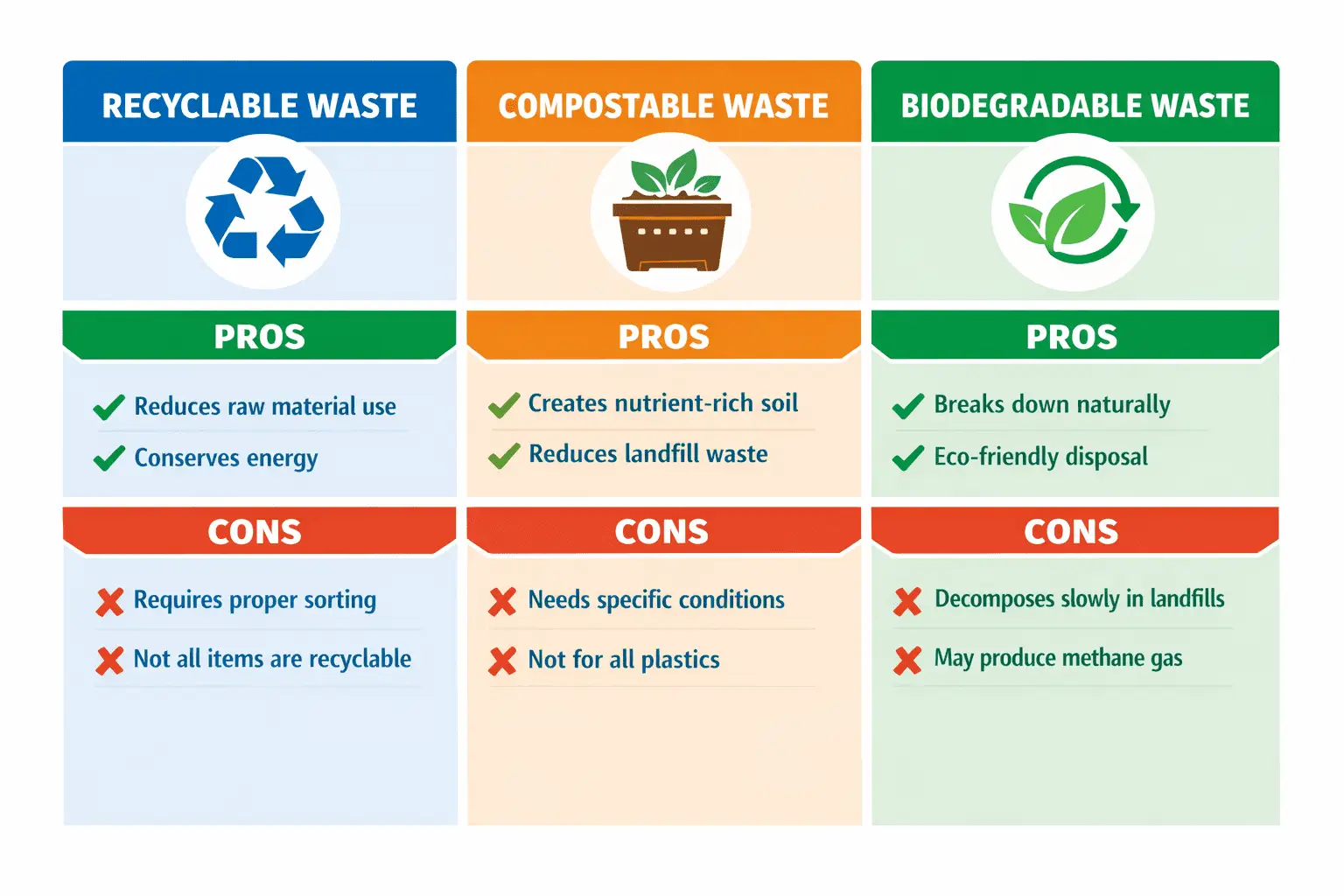
With biodegradable vs compostable waste, the key difference is the way in which the materials are broken down and what is left behind. Compostable materials are a specific type of biodegradable material that are subject to higher standards. They are designed to fully decompose into nutrient-rich compost within a set timeframe and under controlled composting conditions. Biodegradable materials may break down much more slowly or only partially. In some cases, they may even fragment into harmful microplastics – which actually contribute to pollution rather than reduce it.
The table below illustrates some of the core differences, and pros and cons of recyclable, biodegradable and compostable waste:
Recycling Guidelines: What to Do With Your Waste
Knowing which bin to put your waste in is only half the battle. Understanding different labels and what to do with each type of waste for optimum recycling is also important in the fight against waste.
Recyclable Waste
- Place clean, dry recyclable items, like glass food jars and tins, in your designated recycling bins
- Make sure items like plastic bottles and food packaging are free from food residue to avoid contaminating the recycling stream
- Flatten cardboard boxes to save space in your bin
- Don’t mix recyclables with food waste; separate food into your food or compost bin
- Avoid recycling broken glass or sharp objects
- Put plastic bags and other soft plastics in supermarket recycling bins designed for this purpose and not in household waste
Biodegradable Waste
Biodegradable waste typically always goes in the general waste bin, unless clearly labelled as compostable. You could also repurpose any biodegradable waste at home, for example, cleaning plastic takeaway containers, and using them to store small items like lego.
It’s important not to assume something is recyclable. By putting biodegradable waste into a recycling bin, you contaminate all the items and they may then not be recycled at all. Check labels carefully and always dispose of materials in the correct bin.
In an ideal world, you could try to avoid buying biodegradable products and choose recyclable or compostable items instead, such as replacing plastic toothbrushes with bamboo ones.
TALK TO FRESH START

Compostable Waste
In the UK, compostable food waste can be separated into your designated food bin (usually the green one), using the green compostable bags issued by your local council. Other compostable goods, such as packaging, should not go in your compost bin or in your other recycling bins. Compostable waste is designed to break down in very specific composting conditions and not in the same way as other recyclables. Therefore, they should be put into general waste.
While compostable waste is somewhat better than biodegradable waste, it can still take time to decompose. Where possible, always choose a recyclable waste alternative.
Household and Business Waste
The Household Waste Recycling Act came into force in 2003, requiring all local waste collection authorities in England and Wales to make arrangements for the separate collection of recyclable household and waste. The goal is to improve recycling rates by ensuring recyclable waste is collected separately from other household rubbish.
Businesses have only recently been subject to similar laws, with the introduction of Simpler Recycling legislation in 2025. This states that busineses with 10 or more employees must now segrate their waste in the same way homeowners do. Using a licenced waste carrier like Fresh Start is the best and most efficient way to manage this.
Domestic properties can also hire our domestic skips for larger projects to make sure that their waste is processed and recycled properly.