Metal waste is an incredibly valuable resource. Metal is 100% recyclable and can be recycled continuously forever, therefore significantly contributing to a circular economy and protecting virgin resources. According to the British Metals Recycling Association (BMRA), for every tonne of steel that is recycled, 70% of the energy and 40% of the water required to make new steel is saved. This is just one reason why it’s vital to understand how to recycle metals correctly and do more for the planet. Our guide will explain which types of metals can be recycled, where to take them and what happens to metal waste recycling.
Key takeaways:
- Almost all metals can be recycled
- Ferrous metals contain iron and include food cans and car parts
- Non ferrous metals are more valuable and include copper wiring and brass fittings
- Metals should be sorted and cleaned prior to recycling
- Radioactive metals, paint-coated metals and metals containing mercury cannot be recycled
- Metal waste recycling uses uses 95% less energy
- The global metal recycling market is projected to reach $95.6 billion by 2034
Contents:
- Is metal recyclable?
- Which types of metal can be recycled?
- How to recycle metal
- What is recycled metal turned into?
- Which metals cannot be recycled?
- Why recycling metal matters
- Tips for recycling metal
Yes, almost all metals can be recycled. Metal is actually one of the easiest materials to recycle because it can be melted down and reformed without degrading its quality. A product made from recycled metal will be just as strong and durable as the original item. Recycled metal also requires substantially less energy to process than virgin ore and so is an attractive option for manufacturers. The UK scrap metal industry is valued at approximately £5.6 billion to £9.1 billion annually because of how easy and effective metal waste recycling is.
Metal recycling transforms discarded aluminum cans, steel beams, copper wiring and countless other items into raw materials ready to be turned into something new. Whether you’re a homeowner having a clear out, a contractor managing construction waste, or a retailer looking to reduce environmental impact, metal recycling can make a huge difference to the planet and the economy.
Which Types of Metal Can Be Recycled?
When it comes to knowing how to recycle metal, it’s important to start by understanding the two main types. These are ferrous and non-ferrous metals.
1. Ferrous Metals
Ferrous metals contain iron and are typically magnetic. They are often recycled in large volumes because of how common they are, and are heavier and less valuable than ferrous metals. These metals are typically used in construction and manufacturing.
Common ferrous metals include:
- Steel food cans
- Structural steel
- Cast iron
- Household appliances
- Car parts
2. Non-ferrous metals
Non-ferrous metals do not contain iron and can usually be recycled indefinitely while retaining their original value. They resist corrosion, are often lighter and are more valuable when recycled than ferrous metals.
Non-ferrous metals include:
- Aluminium – drink cans, foil and window frames
- Copper – wiring and pipes
- Brass – fittings and fixtures
- Lead – batteries
- Zinc and nickel alloys
Ferrous and non-ferrous metals are processed and recycled differently. They will go onto become different products and have a higher value for manufacturers.
How to Recycle Metal
Recycling metal is a fairly straightforward process. Here is how to quickly and easily organise metal waste for recycling.
1. Identify the Metal
It’s not crucial to identify the metal, especially if using a licensed waste carrier like Fresh Start who will sort it for you. However, if you wish to know the difference there are some simple ways to identify which metal is being recycled.
Start with a magnet test. If a magnet sticks, the metal likely contains iron and is therefore ferrous, such as steel or cast iron. If the magnet doesn’t stick, it’s usually non-ferrous, like aluminium, copper or brass.
Colour and weight can guide you. Aluminium is light and silvery, copper is reddish-brown, and brass has a yellow tone.
2. Prepare the Metal Waste
When recycling metals, you need to clean them first. Try to remove food residue, labels, coatings or other attached materials. If you don’t you might contaminate the load with non-recyclable materials.
Household items like cans and tins can be easily rinsed and placed in domestic recycling bins. Larger commercial metal waste is likely to be placed in a commercial skip or RoRo but will be processed much more easily if free of contaminants.
3. Collection and Sorting
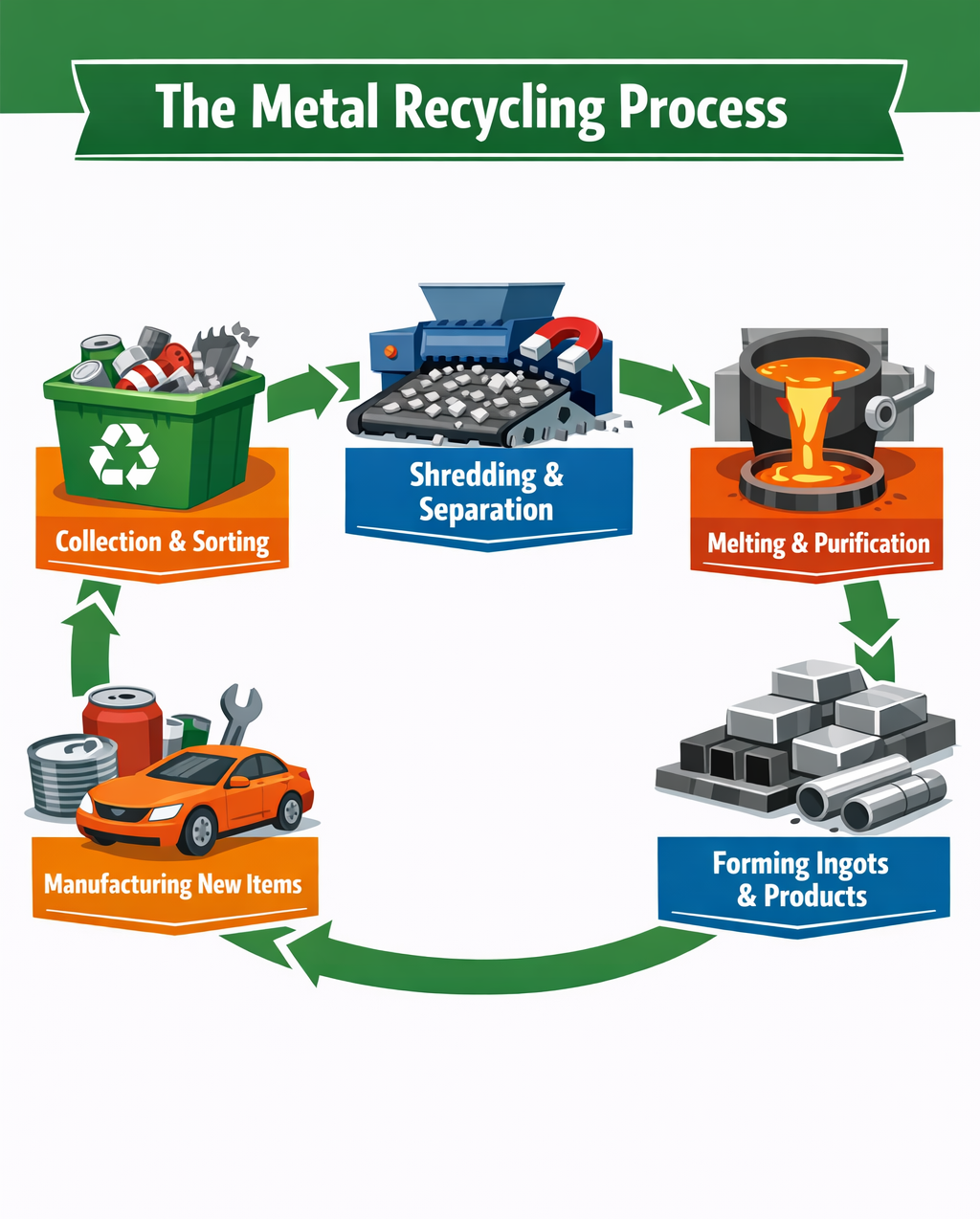
Once you have placed the metal waste recycling into the correct container, it will be collected and taken to a sorting facility. After metals are sorted, they are shredded into small pieces to make them easier to process. Machines can then separate different metals using magnets and other technology.
4. Processing
The shredded metal is melted in high-temperature furnaces, where impurities are removed to produce clean usable new metal. Once it has been purified, the molten metal is poured into molds to form bars, sheets or blocks. These materials are sent to manufacturers and used to create new products.
What is Recycled Metal Turned Into?
In many cases, recycled metal can become the same item it was before, such as electrical wiring or steel construction beams. Here are some other examples of what recycled metal is used for:
- Construction materials – Steel and aluminium are reused to create building beams, roofing, window frames and structural supports
- Vehicle parts – Recycled metals are often used in cars, bicycles, trains and aircraft components including engine parts and body panels
- Food and drink packaging – Aluminium and steel are frequently recycled into new food tins and drink cans
- Electronics and appliances – Copper, aluminium and other metals are reused in electrical wiring, household appliances and electronic devices
- Tools and machinery – Many industrial tools, equipment parts, and machinery components are produced using recycled metals.
Which Metals Cannot Be Recycled?
Although most metals can be recycled, there are some types of metal waste that must be disposed of separately.
1. Radioactive Metals
Scrap contaminated with uranium, plutonium, or thorium, for example from medical equipment or industrial gauges, requires specialised disposal. Radioactive metals must never enter standard recycling streams due to serious health risks and strict regulations.
2. Mercury-Containing Metals
Metals, like thermostats, fluorescent bulbs and certain switches contain liquid mercury, which can contaminate entire processing batches. These will need to be processed as hazardous waste instead.
3. Metals with Recycling Limitations
Some metal alloys are difficult or uneconomical to recycle. Materials with unusual combinations or impaired structural integrity often cost more to process than to produce new metal. Even common metals can become unrecyclable if contamination is too high or it becomes too expensive to separate the parts.
4. Paint-Coated Metals
Painted metals are a difficult area to navigate. The metal is technically recyclable but heavy layers of lead or cadmium require special preprocessing that many facilities are not capable of. For example, a painted steel beam may be recyclable, but a radiator with lead paint from before 1978 usually is not. These often require specialist knowledge.
Why Recycling Metal Matters
Recycling metals has a significant number of advantages, including:
- Energy savings – It uses far less energy to recycle metal than to create new. Recycling aluminum uses 95% less energy than producing it from raw ore. Steel recycling reduces energy use by 74%, and copper recycling saves 85% compared to primary sources.
- Environmental impact – Each ton of recycled steel prevents 2,500 pounds of iron ore, 1,400 pounds of coal and 120 pounds of limestone from being mined. This reduces the strain on natural resources as the global demand for metal increases.
- Greenhouse gas emissions – Recycling steel lowers CO₂ emissions by 86% per ton, while aluminum sees a 92% reduction. With millions of tons processed per year, there is a significant and measurable effect on the earth’s atmosphere from using recycled metal.
- Economic growth – The metal recycling market is projected to reach $95.6 billion by 2034, reflecting both the increasing demand for metals and the economic opportunities in sustainable recycling.
Tips for Metal Waste Recycling
To help you easily manage your metal recycling, here are some tips to follow:
- Don’t throw metal in general waste
Even small metal items like lids, cans and foil can often be recycled
- Rinse food cans before recycling
Cleaning containers helps prevent contamination and ensures whole batches of recycling are not wasted
- Remove non-metal components when possible
Take off plastic, rubber or wooden parts, particularly from construction waste to make recycling easier.
- Check local recycling guidelines
Recycling rules can vary depending on your local authority or recycling provider so check what is and is not accepted in domestic wheelie bins.
- Store scrap metal safely
If you are collecting scrap metal for recycling, keep it dry and organised until you can take it to a recycling facility.